August 4, 2026
The cheat sheet: footprint, power, setup time
If you're a planner or venue coordinator, these are the numbers you actually need — the same ones we give out on every quote:
• Open-air: roughly 8x8 ft of floor space, one standard outlet, 60–90 minutes to set up.
• 360: a 10x10 ft clear zone so the rotating arm never meets a guest, plus space for a short line. One standard outlet.
• Mirror: about 6x8 ft of floor space — but it's tall and heavy, so the path into the room matters as much as the room itself.
• Roaming: zero footprint. The booth walks to your guests. It only needs a workable cell or wifi signal.
• Selfie booth: the smallest hard footprint we offer — a compact stand that tucks into a corner near an outlet.
Every rental includes an on-site attendant who handles setup and breakdown, so nobody on your staff touches a cable. The rest of this post is the detail behind each line.
Open-air: the easy one
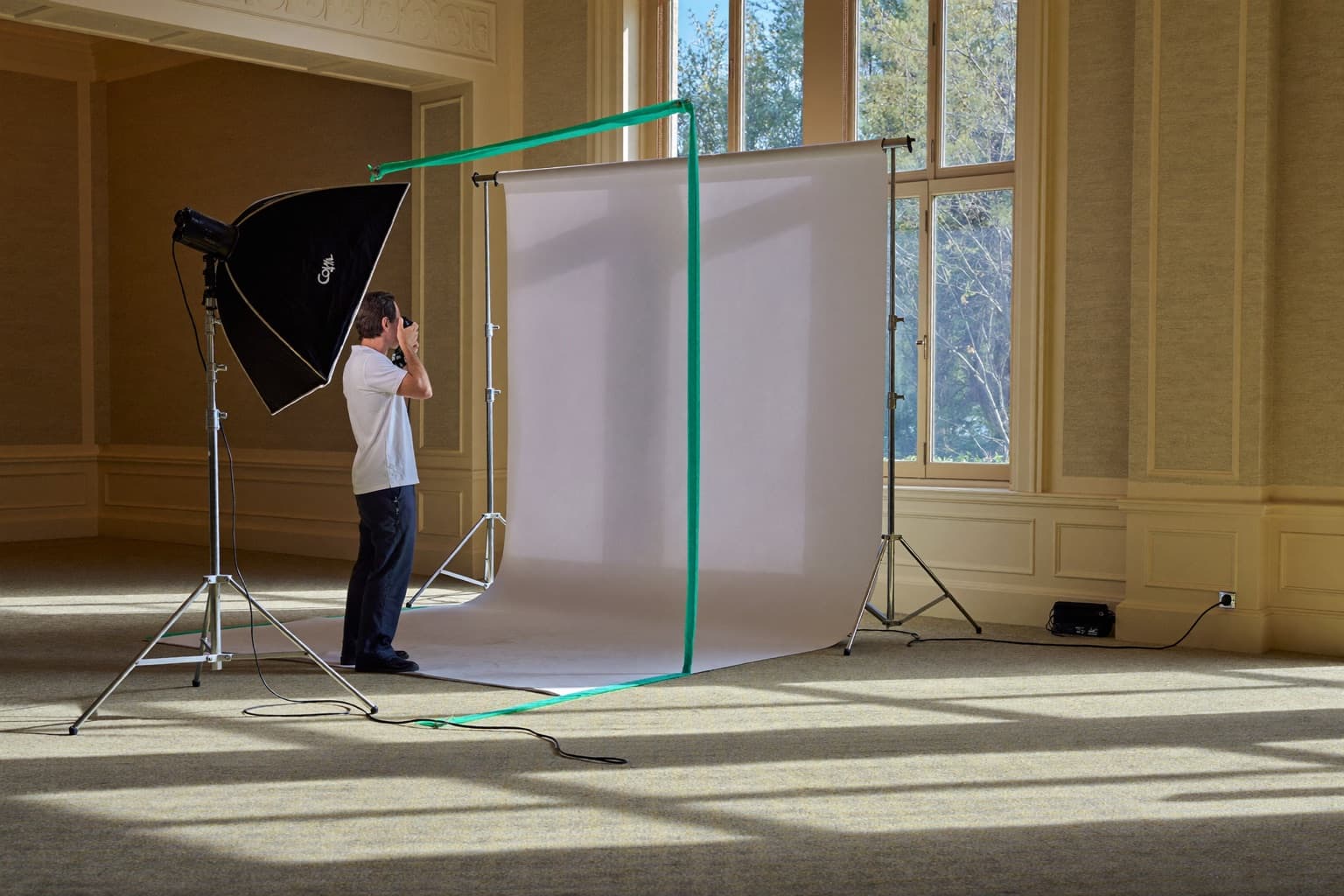
An open-air photo booth is the most forgiving setup in the lineup: a camera-and-light tower facing a backdrop, with open space between them for big groups. Plan on an 8x8 ft area — the backdrop itself is about 8 ft wide — and we can go tighter if we skip the backdrop and shoot against a good wall or greenery.
Power is one standard household outlet. It doesn't need to be right behind the booth; we carry taped-down extension runs, so an outlet within about 25 ft works fine.
Placement advice we give every coordinator: near the action, not in it. Off the dance floor, out of the bar line, visible from the main room. If prints are part of the package, save a small table's worth of space nearby for the print station.
360 booths: respect the spinning arm
A 360 booth is a platform guests stand on while a camera arm spins around them at waist-to-shoulder height — which is why the clearance rules are stricter than any other booth.
• A 10x10 ft clear zone, so the arm never shares space with a passing guest or a tray of drinks.
• A level, solid floor. Dance floors and ballroom carpet are fine; a sloped lawn is not.
• One standard outlet, same as open-air.
• Room for a short queue. 360 videos take longer per group than photos, so a line forms — it's part of the fun, but give it a lane that doesn't cross a service path.
Ceiling height is rarely an issue indoors, but flag anything hanging low over the intended spot: chandeliers, bistro lights, tent frames. We'd rather move the zone two feet than find out during load-in.
Mirror booths: tall, heavy, and the elevator question
The mirror booth has a modest footprint — about 6x8 ft with room for guests to pose — but it's the one booth where we ask about the building before we ask about the room.
The mirror stands taller than most of your guests, and it's genuinely heavy. It rolls fine on flat ground, so what we really need to know is the path in: Is there a loading area? An elevator, if the event is upstairs? Any narrow doorways or tight turns? Stairs aren't automatically a dealbreaker, but they're a conversation for the week before, not the hour of load-in.
It's a favorite for weddings and corporate holiday parties in hotel ballrooms — the kind of spaces that usually have the loading dock and freight elevator that make delivery painless.
Roaming: for rooms with no room to spare
Some floor plans genuinely have no spare 8x8 ft — sold-out seated dinners, galleries, cocktail-style events where every corner is already working. That's exactly what a roaming photo booth is for.
Our attendant carries the setup and brings it to your guests — at their tables, in the lounge, wherever the energy is. No footprint, no backdrop, no power drop, nothing on your floor plan.
The one thing it does need is a signal. Instant sharing by QR code, text, and email runs on wifi or cell data, so if your space is a known dead zone — stone walls, lower levels — tell us up front. Guests still get every photo; delivery just waits until the booth is back in coverage.
Outdoor setups and the pre-event walkthrough
Connecticut's outdoor season is worth the extra ten minutes of planning. Three rules cover almost everything:
• Cover overhead. A tent, pavilion, or porch — cameras, printers, and lighting can't sit under open sky, even on a perfect forecast.
• Level, firm ground. A patio, deck, tent floor, or dry, level lawn all work.
• A real power source. Tell us where the nearest outlet actually is; long runs across a lawn need the right cable, and we'd rather bring it than discover the distance on event day. A quiet generator works too.
The easiest way to settle all of this: send a floor plan or a couple of phone photos of the space when you inquire, and we'll confirm fit and placement before anything is locked in. Our photo booth planning checklist for Connecticut events covers the rest of the day-of details.
Have a specific room in mind? Check your date and tell us about the space — we'll tell you straight whether it fits.